Among all types of decorative glass sand, “gold-colored” varieties command the highest premium—yet they also carry the greatest risk of disappointment. Manufacturers of handicrafts, flooring contractors, and engineered stone processors have all, at some point, encountered issues such as the gold color fading, the coating rubbing off as powder, or the material turning white when submerged in resin. Many clients fail to distinguish between cheap, spray-painted colored sand and glass sand treated with a durable, color-locking film; the two differ vastly in terms of cost and longevity.
“Gold granules” are produced using clean, transparent glass sand (often the same base material used for clear/white glass aggregates) as a substrate. After the substrate is cleaned and dedusted, a high-temperature coating and color-fixing process is applied to create a durable, gold-colored functional layer on the surface of each granule. The material then undergoes curing, drying, screening, and final dust removal.
❌ Low-cost market alternatives: These are merely spray-colored sands lacking a proper curing process. Characteristics: The color rubs off easily by hand; it fades when exposed to epoxy thinners, mechanical sanding/friction, or water. These are suitable only for short-term, one-off decorative displays and cannot be used for terrazzo, countertops, or long-term outdoor applications.
✅ Industrial-grade gold granules: These feature multi-layer coating and high-temperature curing, resulting in a highly adhesive color layer. They can withstand immersion in resin, sanding, and washing, making them ideal for terrazzo, engineered stone countertops, and resin crafts—applications that require long-term durability.
A simple test for verification (upon receipt of goods): Take a handful of the granules and rub them firmly against a sheet of white paper. If visible gold powder is left on the paper, the product is low-quality spray-colored sand. If there is little to no powder residue, the product consists of properly cured, color-fixed gold granules.
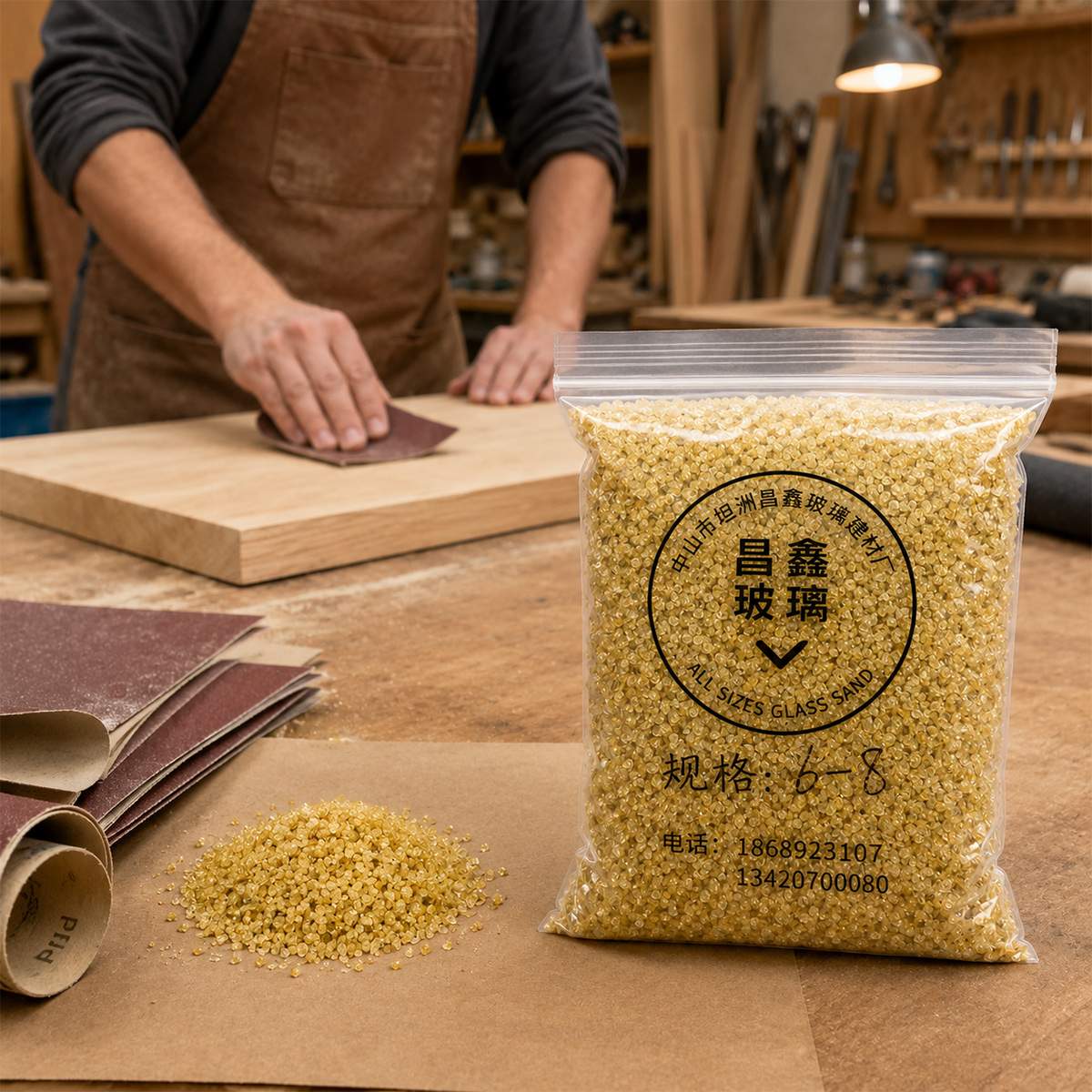
✅ Recommended Use Cases:
1. Accents for epoxy terrazzo, inorganic terrazzo, bar counters, and reception desk stone slabs; when paired with white mirror glass, it creates a “light luxury” gold-and-silver shimmering effect.
2. Resin crafts, bases for aromatherapy products, “quicksand” art, and decorative cultural/creative ornaments.
3. Interior landscaping, top-dressing for planters, and temporary commercial visual displays or sand table models.
⚠️ Not Recommended For:
Long-term outdoor exposure to direct sunlight or environments with prolonged immersion in strong acids. The colored coating on the sand will gradually degrade under intense, long-term UV exposure; please exercise caution when considering outdoor applications, or opt for uncoated glass sand (such as white mirror glass) instead.
Additionally, these gold-colored particles are not suitable for sandblasting processes, as the impact will directly damage the gold-colored surface coating.
Gold-colored aggregate particles are generally not used as a primary aggregate to cover large areas; instead, they serve as decorative accents—used sparingly, they provide a striking, brightening effect:
– Standard Terrazzo: These typically account for 2%–8% of the total aggregate volume. A combination of gold particles and white mirror glass creates a particularly high-end, premium look.
– Epoxy Resin Crafts: The proportion can be adjusted based on specific design requirements; fine-grade gold particles are ideal for surface-level detailing.
– Coordination Tip: Whenever possible, source both the white mirror glass and the gold particles from the same manufacturer. This ensures consistent particle sizing (mesh count) and a uniform luster and texture, preventing any visual clash that might arise from mixing materials with different surface characteristics from different suppliers.
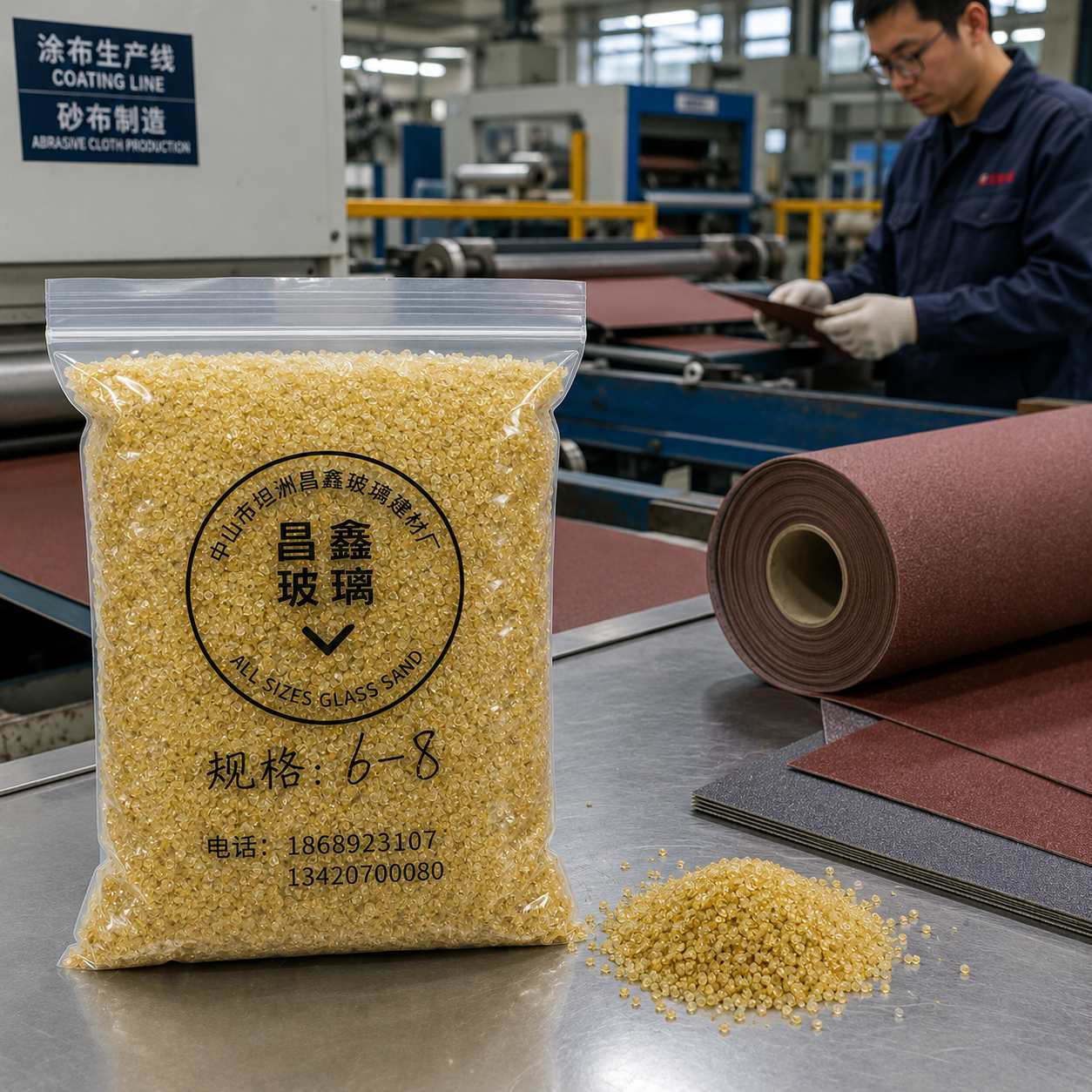
Q1: Can gold-colored glass granules be shipped pre-mixed with “white mirror” glass (clear, reflective glass) or standard glass sand?
A: Yes. We can pre-mix and package them according to your specified ratios, allowing for immediate use upon arrival and saving you the labor of mixing materials on-site.
Q2: Is there such a thing as colorfast (non-fading) gold-colored glass sand?
A: There is no such thing as a permanently colorfast, coated colored glass sand. While color-fixing processes can significantly improve adhesion, solvent resistance, and wear resistance, we do not recommend using gold-colored granules for projects exposed to long-term, direct outdoor sunlight. In such cases, using the natural, uncoated “white mirror” glass aggregate is a more reliable choice.
Q3: Is there a risk of color variation between different batches of gold-colored granules?
A: Established factories that use standardized colorant formulas and controlled curing temperatures can keep batch-to-batch color variation within acceptable limits. In contrast, products sourced through multiple intermediaries often lack such consistency, frequently resulting in noticeable color discrepancies (e.g., some batches appearing light gold while others are dark gold).
Located in the Wuxing Industrial Zone of Shishan, Nanhai District, Foshan, the Foshan Nanhai Changxin Glass Building Materials Factory specializes in the in-house processing of gold-colored glass granules. Our production process strictly adheres to a comprehensive workflow: substrate cleaning, color-fixing/coating, curing/drying, and precise grading (sieving). Before leaving the factory, every batch undergoes rigorous testing—including abrasion (rub-off) tests and resin-immersion sample tests—to proactively manage and mitigate the risk of color fading. We offer gold-colored granules in various specifications and can supply them alongside “white mirror” glass or standard glass sand for sampling and production.
Whether you are working on terrazzo projects, engineered stone slabs, or resin-based crafts, we can help determine if gold-colored granules are suitable for your specific application—considering factors such as indoor/outdoor use, epoxy casting, and grinding/polishing requirements. We provide reliable material combinations to ensure your project remains durable and free from post-completion issues like color fading.
Notifications